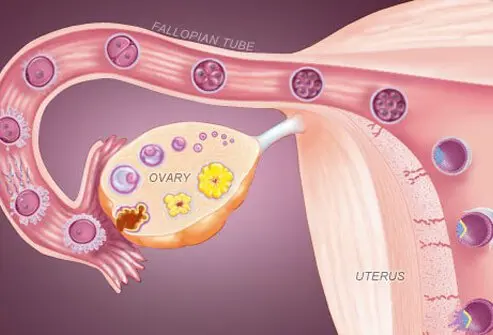
This is indeed an interesting discovery regarding females' ovaries.
Generally, we consider the ovaries as being associated mainly with reproduction and hormones. Yet new research shows a different point of view. As the reproductive period comes to a halt, the ovaries may not simply become inactive but may also have a different function.
I found two intriguing studies which deal with ovaries after reproduction.
The first one was published in Molecular Human Reproduction in 2026, and it investigated reproductive ageing in mice. The findings indicated that post-reproductive ovaries were characterised by an intensified immune environment with increased amounts of immune cells such as T-cells and macrophages. Furthermore, the research showed alterations in the inflammatory signalling pathway and structure of ovarian tissue itself.
The second research project aimed at human ovarian tissue obtained from postmenopausal women. The scientists examined thousands of various proteins and came to the conclusion that the ovaries continuously change even long after menopause. In particular, the research showed changes in immune responses, inflammation, and tissue remodelling in the ovaries of postmenopausal women.
The findings indicate that ovaries do not "turn off" after menopause; at least they remain active in biological terms and have changed their function.
However, there are important caveats; the first study involved mice, while the second article is currently in a preprint stage and has not undergone peer review yet. So we do not know yet whether the changes are beneficial or harmful.
Whatever these changes might mean, I think it is great progress that women's ovaries are finally being studied for what they are actually doing after menopause.
References
Converse et al., Molecular Human Reproduction (2026), “The post-reproductive ovary shifts from a reproductive to an immune-like organ.” https://doi.org/10.1093/molehr/gaag038
Watson et al. (2026), “The human ovary exhibits dynamic molecular remodelling in the decades post-menopause.”
https://doi.org/10.64898/2026.03.26.714635
More About the Research
For many years, the ovary after menopause has often been viewed primarily as an organ whose reproductive function has ended. However, these two recent studies suggest that the post-reproductive ovary may remain biologically active and undergo substantial changes long after reproductive function has ceased.
The first study, published in Molecular Human Reproduction in 2026, examined ovarian ageing in mice. Researchers compared ovaries from reproductively young mice, reproductively old mice and post-reproductive mice. They observed progressive loss of ovarian follicles, changes in the supporting tissue and increased collagen deposition. At the same time, gene-expression analysis showed that older ovaries developed a much stronger immune-related profile. Post-reproductive ovaries contained increased numbers of immune cells, including T cells and macrophages.
The researchers described this as a shift from a predominantly reproductive identity toward an immune-like state. They also identified changes in genes associated with inflammation and immune signalling. Some of the altered ovarian factors could potentially be secreted and influence tissues outside the ovary. However, this remains a biological hypothesis rather than evidence that the ageing ovary directly causes inflammation or disease elsewhere in the body. The experiment was performed in mice, so the findings cannot automatically be applied to postmenopausal women.
The second study provides complementary evidence from human tissue. Researchers examined healthy ovarian tissue from 28 postmenopausal women between 50 and 75 years of age. Using mass spectrometry, they measured 5,812 protein groups and found that ovarian protein patterns changed progressively with age. In particular, older ovaries showed changes involving extracellular-matrix remodelling, inflammatory signalling, metabolism and innate immune or complement pathways.
This human study is particularly interesting because the changes were observed decades after menopause rather than only around the menopausal transition. The researchers identified proteins associated with tissue remodelling and cellular signalling, including WNT4 and fibromodulin, and proposed that the postmenopausal ovary may continue to participate in local and potentially broader biological signalling.
There is an important limitation, however. The human study is currently a bioRxiv preprint and has not undergone peer review, meaning its findings should be regarded as preliminary. The sample size is also relatively small, and the study examines associations between age and ovarian protein patterns rather than proving that these molecular changes cause particular health outcomes.
Taken together, the studies do not show that the postmenopausal ovary suddenly acquires a completely new organ function. Instead, they provide evidence that the ovary remains a biologically changing tissue after reproductive function ends. The mouse study suggests an increasingly immune-like and inflammatory environment, while the human study identifies age-related changes in thousands of proteins.
Future research will need to determine what these changes actually mean for women's health. In particular, scientists will need to establish whether postmenopausal ovarian signalling has meaningful effects on other organs, whether the changes are protective or harmful, and how these processes differ between individuals.
The broader message is therefore quite interesting: menopause may mark the end of ovarian reproduction, but it does not necessarily mark the end of ovarian biology.
References
Converse, A., et al. (2026). The post-reproductive ovary shifts from a reproductive to an immune-like organ. Molecular Human Reproduction, 32(2), gaag038. PubMed record
Watson, M. A., et al. (2026). The human ovary exhibits dynamic molecular remodeling in the decades post-menopause. bioRxiv preprint. bioRxiv preprint