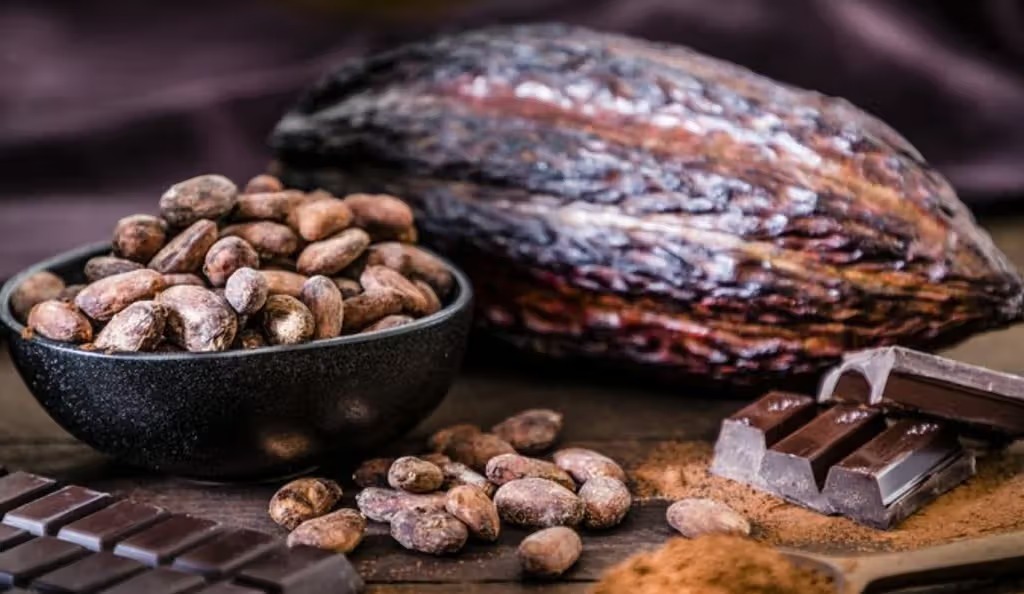
We have always praised dark chocolate for its antioxidant effects, but the new research reveals that it works for more than that.
There are compounds in cocoa called flavan-3-ols, including epicatechin, that can influence blood vessel activity. These compounds may improve the function of the blood vessels’ inner lining, called the endothelium, partly by influencing nitric oxide production and signalling. Nitric oxide helps relax and widen blood vessels, which can improve blood flow.
In the year 2019, a systematic review of randomised trials was conducted, and the authors found that cocoa flavonoids show a significant change in flow-mediated dilation (FMD), which happens to be the endothelial function. This review consisted of a total of 15 published studies with 18 intervention groups. The final result indicated an improvement of around 1.17% in FMD.
Recent data have allowed us to understand even more. The meta-analysis of 2025, involving 145 trials with 5,205 participants, has found that consumption of flavanol-3-ols positively affects endothelial function and leads to a modest reduction in blood pressure.
The most crucial point here is that cocoa may be more than the above-mentioned antioxidant. Flavan-3-ols seem to have an influence on vascular activity through vascular signalling pathways.
Nonetheless, it does not mean that chocolate consumption can lead to the treatment of hypertension or heart diseases. Researchers often make use of controlled cocoa or flavanol-rich products, and ordinary chocolate may contain a significant quantity of sugar and calories.
References:
Sun Y, et al. (2019). Cocoa flavanols and endothelial function.
https://doi.org/10.1039/C9FO01747J
Lagou V, et al. (2025). Flavan-3-ols, blood pressure and endothelial function.
https://doi.org/10.1093/eurjpc/zwaf173
More About the Research
What makes cocoa flavanols interesting?
When people talk about the possible health benefits of dark chocolate, the conversation often focuses on antioxidants. But cocoa contains several compounds that may have other biological effects too.
One group that has attracted particular interest is flavan-3-ols, including compounds such as epicatechin.
These compounds are being studied because they appear to interact with the cardiovascular system, including the endothelium — the thin layer of cells lining our blood vessels.
The endothelium plays an important role in regulating how blood vessels behave. One of the substances involved in this process is nitric oxide, which helps blood vessels relax and widen.
This is one reason researchers have been interested in whether flavan-3-ols might have measurable effects on vascular function.
What did the 2019 research find?
A 2019 systematic review and meta-analysis looked specifically at cocoa flavanols and flow-mediated dilation (FMD).
FMD is a measurement commonly used in research to assess how well blood vessels respond to increased blood flow. It provides an indication of endothelial function.
The researchers included 15 published articles containing 18 intervention arms. Across the studies, the analysis found an improvement in FMD of about 1.17 percentage points following cocoa-flavanol interventions.
That sounds promising, but there was considerable variation between the individual studies. The researchers also reported substantial heterogeneity and raised concerns about risk of bias in many of the studies.
So, while the overall result was interesting, it shouldn't be interpreted as proof that eating chocolate will prevent cardiovascular disease.
What did the larger 2025 analysis discover?
The more recent research gives us a much larger body of evidence to look at.
In 2025, Lagou and colleagues published a systematic review and meta-analysis of randomised controlled trials examining flavan-3-ol-rich interventions and their effects on blood pressure and endothelial function.
The analysis included 109 publications representing 145 randomised controlled trials and 5,205 participants.
The interventions weren't limited to chocolate. They included different flavan-3-ol-rich foods, drinks and supplements, including cocoa products, tea, apples, grape extracts and isolated compounds such as epicatechin.
The researchers found that repeated consumption of these flavan-3-ol-rich interventions was associated with modest reductions in blood pressure. The analysis also found improvements in measures of endothelial function.
For example, the reported reductions in office blood pressure were around 2.8 mmHg systolic and 2.0 mmHg diastolic, while reductions in 24-hour ambulatory blood pressure were around 3.7 mmHg systolic and 2.6 mmHg diastolic.
These are relatively modest changes, but the size of the evidence base makes the findings interesting.
Does this mean dark chocolate is good for your heart?
This is where things get a little more complicated.
The research is about flavan-3-ols, not simply about eating as much chocolate as possible.
Different chocolate products can contain very different amounts of cocoa flavanols. Some chocolate products also contain considerable amounts of sugar, fat and calories.
The 2019 analysis itself included cocoa drinks, chocolate and combinations of the two, and the amount of flavanols varied considerably between interventions.
So we shouldn't take a finding about a controlled cocoa or flavanol-rich intervention and automatically assume that any chocolate bar will have the same effect.
This is an important distinction when reading nutrition research.
What could be happening inside the blood vessels?
Researchers are particularly interested in the relationship between flavan-3-ols and nitric oxide signalling.
Nitric oxide is involved in the regulation of blood-vessel relaxation. If endothelial function improves, blood vessels may be better able to respond to changes in blood flow.
The exact biological mechanisms are complex, and researchers are still investigating how different flavan-3-ols and their metabolites interact with the vascular system.
The interesting part is that the potential effect isn't simply about antioxidants “cleaning up” harmful molecules. There appear to be more complicated signalling processes involved.
Should we start eating more chocolate?
Probably not as simple as that.
These studies provide interesting evidence about cocoa flavanols and vascular function, but they don't mean that chocolate should be considered a treatment for high blood pressure or heart disease.
The 2025 researchers specifically noted that flavan-3-ol-rich interventions are not currently used as cardiovascular disease prevention treatments, despite the promising findings.
It is also worth remembering that a healthy diet involves much more than one food or one compound.
For someone who enjoys dark chocolate, choosing a product with a higher cocoa content may be one option, but chocolate still contributes calories and can contain significant amounts of sugar and fat depending on the product.
The bigger picture
Perhaps the most interesting lesson from this research is that foods contain many different compounds that can interact with the body in surprisingly complex ways.
Cocoa flavan-3-ols are one example. Scientists are continuing to investigate whether compounds such as epicatechin can influence blood-vessel function and blood pressure and whether these effects could eventually have meaningful implications for cardiovascular health.
For now, though, the evidence is better described as promising nutritional and vascular research rather than proof that chocolate prevents or treats heart disease.
So, the next time someone says dark chocolate may have health benefits, there is some interesting science behind the idea, but the type, amount and overall diet still matter.
References
Sun, Y., Zimmermann, D., De Castro, C. A., & Actis-Goretta, L. (2019). Dose–response relationship between cocoa flavanols and human endothelial function: A systematic review and meta-analysis of randomized trials. Food & Function, 10, 6322–6330. https://pubs.rsc.org/fo/article/10/10/6322/645844/Dose-response-relationship-between-cocoa-flavanols
Sun, Y., Zimmermann, D., De Castro, C. A., & Actis-Goretta, L. (2019). Dose–response relationship between cocoa flavanols and human endothelial function: A systematic review and meta-analysis of randomized trials. PubMed. https://pubmed.ncbi.nlm.nih.gov/31524216/
Lagou, V., et al. (2025). Impact of flavan-3-ols on blood pressure and endothelial function in diverse populations: A systematic review and meta-analysis of randomized controlled trials. European Journal of Preventive Cardiology, 32(14), 1322–1335. https://academic.oup.com/eurjpc/article/32/14/1322/8092214
Lagou, V., et al. (2025). Impact of flavan-3-ols on blood pressure and endothelial function in diverse populations. PubMed. https://pubmed.ncbi.nlm.nih.gov/40126033/